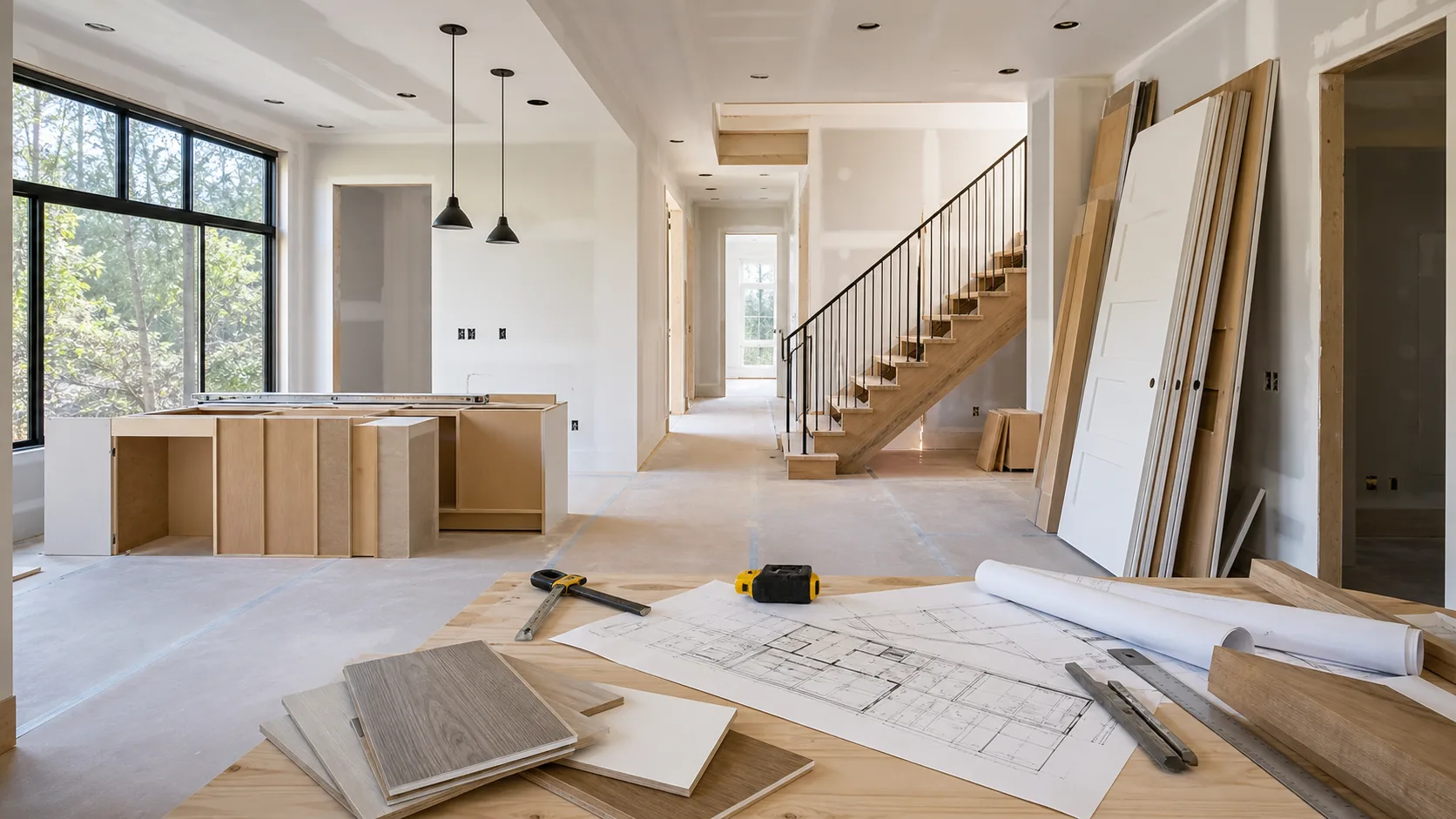
Whole-Home Remodeling Timeline
A whole-home remodeling timeline is shaped by scope, sequencing, decisions, permits, inspections, product availability, and the condition of the existing home.
Timeline Overview
There is no single timeline for a whole-home remodel. A finish-focused update across several rooms is very different from a renovation that changes layout, structural elements, plumbing, electrical systems, windows, or additions.
The ranges below are general planning categories only. They are not Titan schedules or promises.
| Project type | Planning range | What affects timing |
|---|---|---|
| Multi-room refresh | Shorter planning and construction cycle. | Finish decisions, trade availability, product ordering. |
| Interior renovation | Longer because rooms and systems connect. | Sequencing, cabinets, flooring, rough trades, inspections. |
| Layout-changing remodel | More planning and review may be needed. | Structural review, permits, ordering, dependencies. |
| Major whole-home transformation | Most schedule-sensitive category. | Existing conditions, phased access, specialty materials, official review. |
Planning and Design
Timeline begins before demolition. Scope review, layout decisions, selections, estimates, engineering when needed, permit preparation, and construction sequencing all shape the schedule.
Homeowners can shorten avoidable delays by making key decisions early and responding quickly to questions about scope, selections, and priorities.
Permits and Ordering
Permit requirements depend on the actual work and jurisdiction. Structural, plumbing, electrical, mechanical, exterior, or addition-related work may involve official review and inspections. Product ordering can also affect timing, especially for cabinets, windows, doors, appliances, specialty tile, and custom materials.
Construction Phases
Many whole-home projects move through demolition, site protection, framing or structural work, rough plumbing and electrical, inspections, insulation or drywall, flooring, cabinetry, countertops, tile, paint, fixtures, finish carpentry, and final review. The sequence changes by project.
Common Delay Risks
Delays can come from late selections, hidden damage, material lead times, change orders, permit or inspection requirements, weather for exterior work, or trade sequencing. Good planning cannot remove every risk, but it can make risks easier to manage.
Homeowner Checklist
- Ask which decisions are needed before construction starts.
- Confirm whether permits or inspections may apply.
- Review long-lead materials before finalizing schedule expectations.
- Clarify how changes will be documented.
- Plan access, storage, pets, parking, and daily routines.
Frequently Asked Questions
Can Titan guarantee a completion date?
No responsible contractor should guarantee a schedule without reviewing the actual scope, conditions, selections, and permitting needs. Schedules should be project-specific.
What usually slows a whole-home remodel?
Late selections, hidden conditions, change orders, permit or inspection requirements, and unavailable materials are common schedule risks.
Can work be phased?
Sometimes. Phasing may help occupancy, but it can also lengthen the total schedule or create repeated setup and protection.
Related Services
Related Knowledge Center Guides
Trying to understand timing?
Share the rooms involved, desired timing, and any known constraints so Titan can help frame the planning conversation.