Materials & Finishes
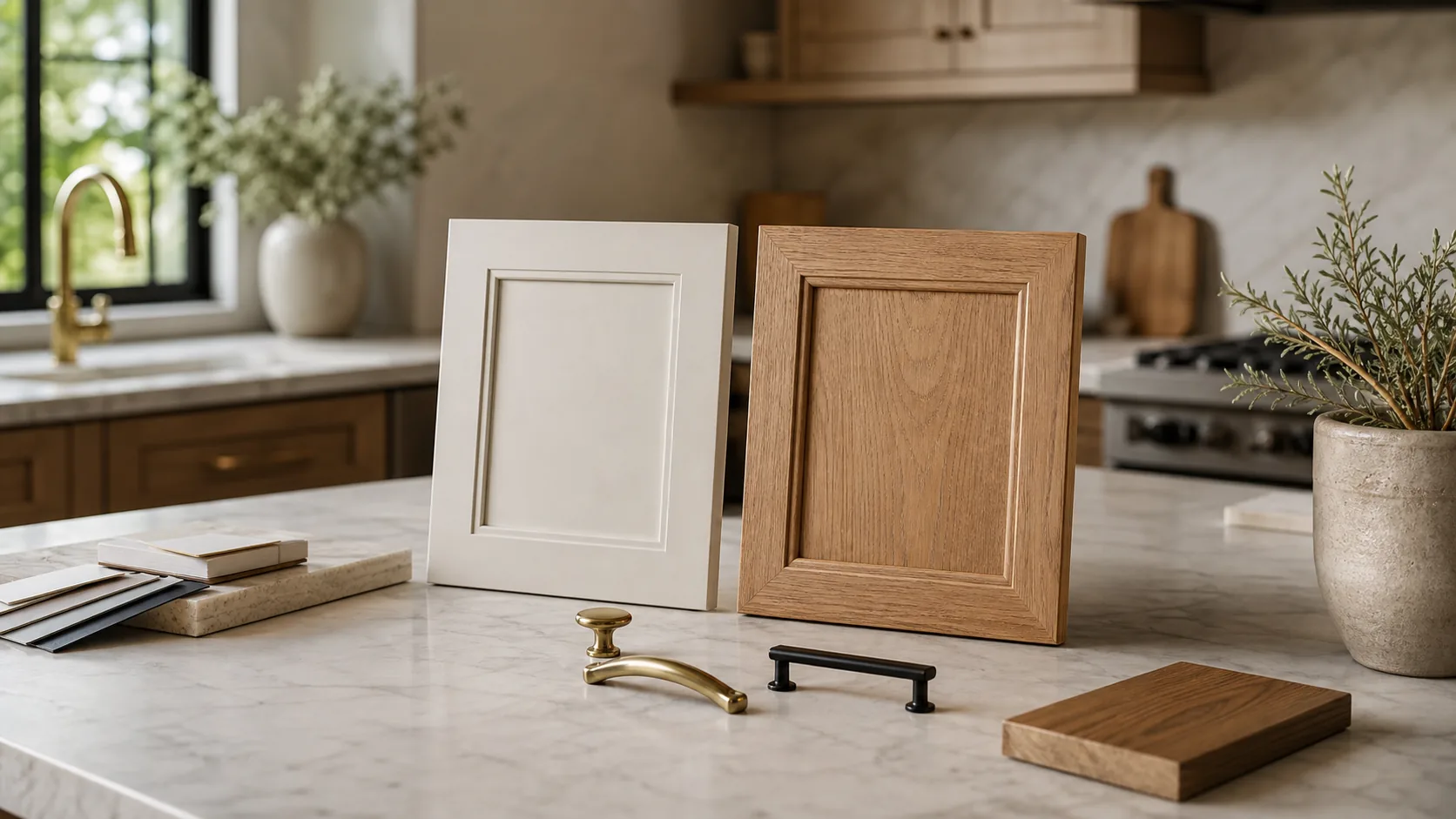
Cabinet Finishes: Painted vs. Stained
Painted and stained cabinets create very different impressions. Painted finishes feel crisp and controlled, while stained finishes emphasize natural wood character and warmth.
Reviewed by Titan Build Group. Published July 20, 2026. Updated July 20, 2026.
Quick Take
Painted and stained cabinets create very different impressions. Painted finishes feel crisp and controlled, while stained finishes emphasize natural wood character and warmth.
Product performance changes by manufacturer, installation method, room conditions, and care. Use this guide as planning context, then confirm final details before ordering.
The Main Difference
Painted cabinets cover the wood surface with an opaque finish. They are often chosen for white, off-white, gray, black, green, and other design-forward palettes. Stained cabinets allow wood grain and natural variation to remain visible.
Neither is automatically better. The right finish depends on the home’s architecture, desired mood, maintenance tolerance, and how much natural wood character the homeowner wants to see.
Durability and Touchups
Painted finishes can show chips, seams, and wear differently than stained wood, especially on high-use doors and drawers. Stained finishes may disguise some minor wear because the grain remains visible, but they can also vary more from piece to piece.
Finish quality, cabinet construction, door style, humidity, and daily use all affect long-term performance.
Matching Finish to Design Style
Painted cabinets often support modern, transitional, coastal, and clean architectural kitchens. Stained cabinets can feel warm, grounded, and timeless, especially with natural oak, walnut, or other wood tones.
Many premium kitchens combine both: painted perimeter cabinets with a stained island, or natural wood accents paired with a cleaner cabinet field.
Budget and Long-Term Ownership
Material cost is only one part of the decision. Subfloor preparation, installation complexity, trim details, waste, maintenance, replacement difficulty, and future repair options can all affect the true cost of ownership.
For remodeling, the best choice is usually the one that balances the look you want with how the space will actually be used every day.
Common Buying Mistakes
Homeowners often compare samples in isolation instead of seeing how they work with lighting, cabinetry, flooring, paint, and hardware. Another common mistake is choosing a product before confirming installation requirements or lead time.
For busy households, maintenance expectations matter as much as appearance. A beautiful material that does not fit the way the home is used can become frustrating after move-in.
Homeowner Checklist
- Compare painted and stained samples in the room’s lighting.
- Ask about expected maintenance and touchup procedures.
- Consider a two-tone approach only when it supports the design.
- Review door style and finish together.
- Confirm finish expectations before ordering cabinets.
Frequently Asked Questions
When should I make material decisions?
Start early enough that selections can be coordinated with design, ordering, and construction sequencing. Late decisions can affect schedule, compatibility, and budget.
Should I choose the least expensive option?
Not always. The right option should fit the room, the expected use, maintenance preferences, and long-term ownership goals.
Can Titan help compare options?
Titan can help homeowners think through practical tradeoffs and coordinate selections with the project scope. Final product details should be confirmed against current manufacturer specifications.
Do material choices affect the schedule?
Yes. Availability, custom ordering, fabrication, and installation sequencing can affect the overall timeline.
Related Services and Guides
Plan the next step with confidence.
Titan Build Group helps homeowners and businesses think through scope, sequencing, materials, and coordination before work begins.
Product-specific manufacturer specifications, installation instructions, warranty details, and care guidance should be verified before final material selection.